The ILEETA Journal
The ILEETA Journal is the official publication of the International Law Enforcement Educators and Trainers Association (ILEETA). It is designed for law enforcement educators, trainers, and professionals, providing them with relevant information on best practices, innovations, and developments in law enforcement training and leadership. The journal covers a wide range of topics such as tactical skills, use-of-force training, leadership development, wellness, and mental health. Articles are typically written by experienced law enforcement trainers and experts, offering practical insights, research, and strategies to help improve the effectiveness of law enforcement agencies and their personnel.
The journal serves as a resource for enhancing training programs and developing the next generation of law enforcement officers, while also focusing on the well-being and professionalism of those currently serving.
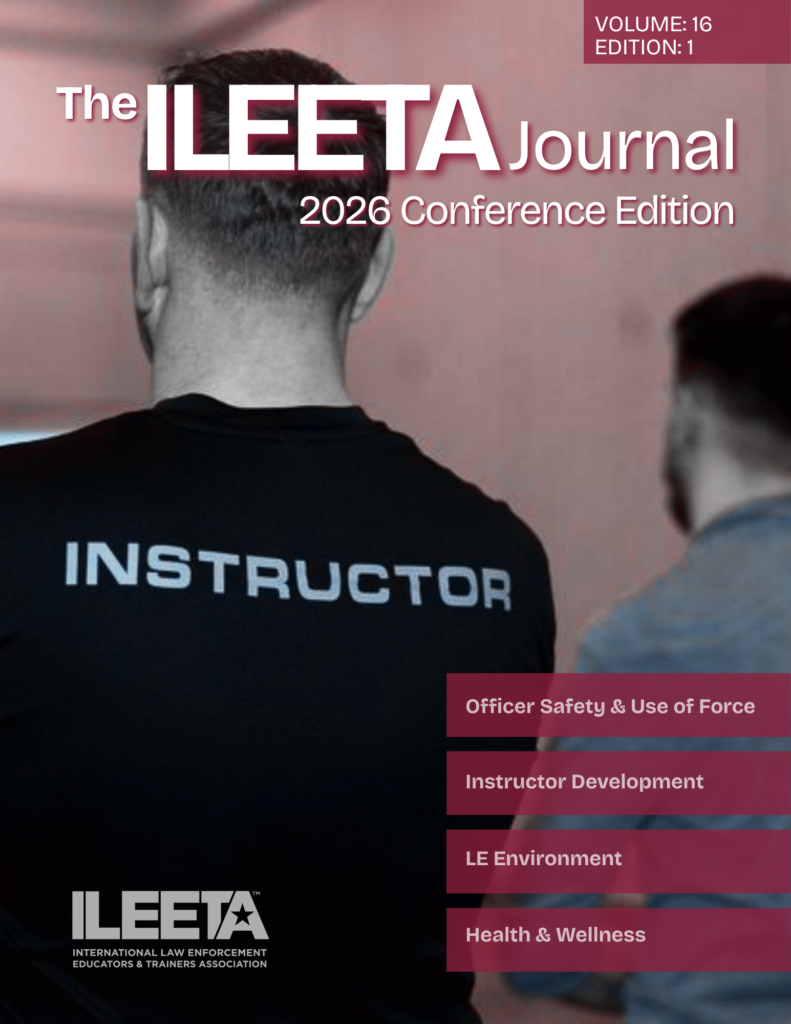
Conference Edition | 2026
The 2026 ILEETA Conference Edition of the Journal reflects the profession’s ongoing pursuit of excellence through innovation in training, leadership development, and operational readiness. This edition expands on many of the courses presented at the ILEETA Conference & Expo, offering deeper insight into the ideas, methods, and experiences shared by instructors from across the profession. Topics range from use-of-force science and combatives integration to instructor development, scenario design, artificial intelligence, and the evolving challenges facing law enforcement organizations.
From marksmanship science and decision-making under stress to recruitment strategies, generational leadership, and wellness, each article highlights practical lessons that trainers can immediately apply in their agencies. Together, these voices reflect the collaborative spirit of the ILEETA community and reinforce a shared commitment to smarter training, stronger instructors, and safer outcomes for officers and the communities they serve.
Meet Me in St. Louis! A Guide to the ILEETA Host City
This article introduces the 2026 conference host city, highlighting St. Louis’ history, culture, and landmarks. It encourages attendees to explore the city while building relationships with fellow trainers during the conference week.
2026 Emerson Hour: What Has Become Clear Since We Last Met?
This reflection explores lessons learned since the previous conference, encouraging instructors to examine how the profession is evolving and what insights should guide future training priorities.
The Currency of Connection: Turn Small Gestures into Lasting Lessons
This article emphasizes the importance of human connection in training. Through small acts of mentorship, encouragement, and communication, instructors can create powerful learning moments that extend far beyond the classroom.
Officer Safety & Use of Force
Stop Calling It Ball and Dummy: The Secret Science of Skip Loading
This article explains the training science behind skip-loading techniques in firearms instruction. It clarifies misconceptions about traditional “ball and dummy” drills and demonstrates how skip-loading better reveals shooter anticipation and flinch.
Myths: Intro to Neutralizing Dangerous Force-Option Myths & Their Consequences
The author challenges common myths surrounding use-of-force options and how misinformation can influence officer behavior. The article urges instructors to confront outdated beliefs and ground training in evidence and realistic expectations.
Why Tool Integration and a Realistic, Scalable, and Principle-Based Approach to Combatives Matters
This piece explores how integrated combatives training can improve officer performance. By focusing on principles rather than isolated techniques, instructors can develop adaptable skills that transfer across real-world encounters.
Leadership in Use of Force: Shared Responsibility, Reduced Risk
The article argues that use-of-force outcomes are shaped by leadership culture as much as individual officer actions. Leaders play a critical role in setting expectations, supporting training, and reinforcing accountability.
Concepts of Disarming Bad Guys
This article examines practical principles for disarming violent suspects. It focuses on situational awareness, timing, and realistic tactics rather than overly complex techniques.
Marksmanship Science of the Police Duty Pistol Explained LIVE!
This article explores the science behind pistol marksmanship, focusing on biomechanics, visual processing, and shooting efficiency. The author translates complex shooting principles into practical coaching cues for firearms instructors.
Design, Instruct, and Conduct an Active Shooter Table-Top Exercise
This article outlines how tabletop exercises can prepare agencies for active shooter incidents. By combining realistic storytelling with structured facilitation, instructors can improve decision-making and coordination before real crises occur.
Instructor Development
AI-Powered Training: From Course Design to Delivery
This article explores how artificial intelligence tools can assist trainers with lesson planning, scenario generation, and training delivery while maintaining instructor oversight and professional judgment.
Training Scars: Ninjas, Zombies and Smart Watches
The author examines how poorly designed training can unintentionally create bad habits or “training scars.” The article encourages instructors to carefully evaluate how drills translate to real-world performance.
Create Next Level Training Using Adult Learning Concepts: The What and Why
This article introduces key principles of adult learning theory and explains how trainers can design courses that improve engagement, retention, and practical skill development.
What’s Your 20?
Borrowing from radio terminology, this article encourages instructors to evaluate where they currently stand as educators and identify opportunities for growth and improvement.
Agentic AI Is Reshaping Scenario-Based Training
The article explores emerging AI technologies capable of generating dynamic training scenarios and adaptive learning environments for law enforcement training.
Eleven Training Concepts Every Law Enforcement Trainer Should Know
This article provides a foundational list of essential instructional principles that help trainers design more effective courses and learning experiences.
Improve Learning with Authentic Assessment
The author explains how authentic assessments can better measure real-world competence than traditional written tests or simple performance checklists.
Death by Template: How Corporate Slide Design Kills Attention
This article critiques over-templated slide presentations and explains how rigid corporate design formats can undermine engagement and learning effectiveness.
Reading the Moment: Human Behavior and Tactical Decision-Making
The author explores how officers interpret behavioral cues during encounters and how training can improve recognition of critical indicators.
LTEM – A New Tool for Evaluating Training Efficacy
This article introduces the Learning Transfer Evaluation Model (LTEM), explaining how it can help agencies evaluate whether training actually improves performance in the field.
Developing Micro-Training: On Purpose, By Design
The author explains how short, focused training modules can reinforce learning between major training events and improve retention over time.
The Keys to Training Excellence: Design, Deliver and Inspire
This article outlines three pillars of great instruction: thoughtful course design, effective delivery, and the ability to inspire learners.
Once Upon a Crime: The Art of Storytelling in Police Training
This piece explores storytelling as a teaching tool, showing how narrative can help instructors communicate lessons more effectively and make training memorable.
De-Escalating the Voluntold: Turning Resistance into Engagement
The author discusses how instructors can manage reluctant students and transform resistance into productive learning experiences.
Instant Impact: Roll Call Training Powered by Video
This article demonstrates how short videos can enhance roll-call training by quickly reinforcing lessons and stimulating discussion among officers.
Law Enforcement Environment & Health and Wellness
The Media Relations Playbook
This article explores how agencies can better manage media interactions during critical incidents while maintaining transparency and professionalism.
Stocking the Pond: Tactical Recruitment and Retention Strategy
The author examines recruitment challenges facing law enforcement and offers strategies for attracting and retaining quality candidates.
The ABCs of Generation Z: Recruit, Train, Retain
This article explains generational differences affecting new recruits and how instructors can adapt training methods to engage younger officers.
Identifying and Addressing Cadet Decision-Making Gaps from the Academy to Field Training
This research-based article examines how decision-making skills develop from academy training through field training programs.
School Safety Isn’t a Soft Assignment: Raising the Bar for School Resource Officers
The author argues that school resource officer assignments require specialized training and should be treated as a critical operational role.
Understanding the Dark Side of Personality – The D Factor
This article examines destructive personality traits that can undermine organizations and explores how leaders can recognize and address them.
Turn Your Training into Online Content: From Lesson Plan to Published Piece
The author explains how instructors can convert training material into written or digital content to expand its reach and professional impact.
Prison Escape Investigations to Improve Agency Protocols
(Case Study: The New Orleans Jail Escape 2025)
This article analyzes a major prison escape and extracts operational lessons for improving correctional security procedures and investigative practices.
Summaries generated by AI
The ILEETA Journal is a quarterly publication of the International Law Enforcement Educators and Trainers Association (ILEETA), aimed at providing a platform for criminal justice professionals, primarily law enforcement trainers, to exchange information on training-related topics. It features articles, editorials, product reviews, and columns that meet stringent criteria for relevance, factual accuracy, and readability. Submissions are required in Microsoft Word format and should adhere to specific writing styles and grammar guidelines. The Journal ensures that all articles are edited for clarity and length and does not accept content promoting products or services.
The ILEETA Journal is the premier resource for cutting-edge insights and best practices in law enforcement education and training. We invite you to contribute your expertise and experiences by submitting an article. Share your knowledge, inspire your peers, and help advance the field. Ready to make an impact? Click here for submission guidelines and become a valued voice in our community.




